Archived Articles

Posted on 11/23/2026 at 01:00 PM
In October 2026, serious security flaws in PHP, a programming language used by millions of websites, caused a worldwide scramble to protect websites. Some organizations temporarily took their sites offline while they worked on fixes.
As artificial intelligence (AI) helps researchers find hidden software flaws faster, similar problems could emerge in other widely used systems. Businesses can reduce their risk by keeping software updated, checking for weaknesses, and choosing a website provider that takes security seriously.
At Global Reach, we believe website security should be built into your website, not treated as an afterthought. Our team develops, hosts, and maintains SiteViz CMS, giving businesses a secure, reliable platform backed by ongoing monitoring, testing, and professional support.
Schedule a Free SiteViz Demo & Consultation
What Happened During the October 2026 PHP Security Crisis?
On October 21, 2026, PHP released emergency updates to fix two serious security flaws known as PHP2Shell.
PHP is a programming language that runs behind the scenes on many websites. It helps websites display content, process forms, manage accounts, and perform other tasks.
Popular website platforms, including WordPress, use PHP.
These security flaws, known as vulnerabilities, could allow hackers to access affected servers and run harmful commands without a password. Hackers could then steal information, change website files, install harmful software, or disrupt website services.
The two vulnerabilities were identified as CVE-2026-109618 and CVE-2026-109619. A CVE number is simply a tracking number assigned to a known software security problem.
The threat was serious enough that some organizations took websites offline while they worked to protect them.
The PHP Foundation urged users to update immediately. By October 26, U.S. cybersecurity officials had added both flaws to a list of vulnerabilities known to be used in real attacks.
Not every PHP website was hacked. However, websites running affected software needed prompt attention.
Why Were These PHP Vulnerabilities So Dangerous?
The problem wasn't limited to one website or one company.
Many websites depend on the same basic software. When hackers find a serious flaw in that software, thousands or even millions of websites may face the same risk.
The PHP vulnerabilities also affected older parts of the software that had been in use for years.
This raises an important question for every business owner:
If a serious security flaw can remain hidden for years, what other problems might still exist in the software we use every day?
Why Similar Website Security Crises Could Happen Again
The PHP crisis may be one of many major software security challenges in the coming years.
Modern websites depend on many layers of technology. These can include website platforms, hosting systems, databases, outside tools, and smaller software components.
Even well-maintained systems can contain hidden weaknesses.
AI Is Finding Software Vulnerabilities Faster
Artificial intelligence is changing how experts find security problems.
In the past, researchers often spent weeks or months studying software code to find weaknesses.
Today, advanced AI tools can help them review large amounts of code much faster.
That can be good news. Developers can use these tools to find problems and fix them before hackers take advantage, but there is also a risk. Hackers may use similar tools to find weaknesses and develop new attacks.
In October 2026, Reuters reported that cybersecurity experts expected AI-assisted research to uncover more serious flaws in widely used software.
More discoveries do not automatically mean more successful attacks. Still, website owners may have less time to respond when serious problems become public.
The Rising Number of Reported Software Vulnerabilities
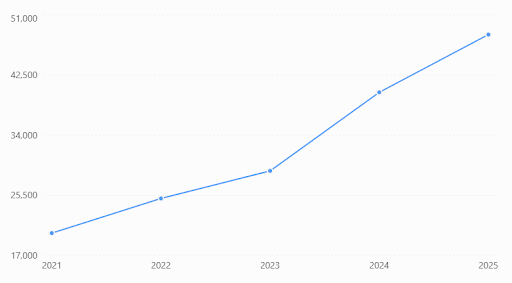
Source: CVE Program, published vulnerability records
Source: CVE Program Metrics. Figures cover full calendar years, 2021–2025.
Older Software Can Create New Risks
Many businesses use websites built years ago. Over time, these sites may collect outdated plugins, old features, and software that no longer receives security updates.
A plugin is software that adds features to a website, such as contact forms, calendars, or online stores. Each additional tool may need its own updates and security checks. If one important component stops receiving support, it can become a weak point in the website.
A website may look modern to visitors while relying on old software behind the scenes.
Common Software Can Affect Many Businesses at Once
Many websites and applications rely on other widely used technologies besides PHP. Other widely used programming tools and software libraries may contain undiscovered weaknesses.
A software library is a collection of code that developers reuse instead of building every feature themselves.
When a serious flaw appears in a shared library, many different products may need updates at the same time. This creates a challenge for businesses that don't know which software their websites rely on.
Some Software Problems Have Nothing to Do With Hackers
Not every technology crisis begins with a cyberattack. Consider the Year 2038 problem.
Some older computer systems store dates using a limited number of digits. On January 19, 2038, those systems could reach that limit and begin reading dates incorrectly.
That could cause problems with scheduling, records, or software that depends on accurate dates.
Many modern systems already avoid this issue, but some older equipment and programs may still need updates.
The lesson is simple: software needs ongoing care, even when no one is trying to attack it.
How Can Businesses Prevent Website Security Problems?
No business can stop every software vulnerability from being discovered. However, a good website security plan can lower the chance of an attack and limit the damage if something goes wrong.
Here are some important steps:
- Keep software updated. Install security updates promptly to fix known weaknesses. A security update, or patch, fixes a problem in software.
- Remove outdated tools. Delete plugins and other software you no longer use. Replace tools that no longer receive updates.
- Monitor your website. Watch for unusual activity and signs that someone may be trying to gain access.
- Test for weaknesses. Schedule regular security checks to find problems before they become emergencies.
- Protect website accounts. Use strong passwords, multi-factor authentication, and limited account permissions. Multi-factor authentication adds another step to confirm your identity when signing in.
- Maintain reliable backups. Keep secure backups of your website and regularly test them to make sure you can restore it if something goes wrong.
- Have a response plan. Know who will handle urgent security problems and how quickly your provider can respond.
How Does SiteViz Compare With Other Website Platforms?
Different website platforms have different maintenance needs.
Open-source platforms like WordPress allow the public to view their code. This gives businesses more options to customize their websites.
These platforms can be secure when properly maintained. However, websites that rely on numerous third-party plugins may require more oversight.
Global Reach's SiteViz CMS takes a different approach.
SiteViz is a closed-source content management system, meaning Global Reach controls the software's core code and development.
A content management system, or CMS, is the tool businesses use to update their website without writing code.
| Website Security Factor | WordPress and Other PHP-Based Websites | Global Reach SiteViz CMS |
|---|---|---|
| PHP2Shell exposure | Sites running affected PHP versions required updates | SiteViz's core platform does not use PHP and was not affected by these specific flaws |
| Software updates | Core software, themes, and plugins may need separate updates | Global Reach develops and manages core platform updates |
| Added features | Often uses third-party plugins | Offers built-in modules that reduce the need for additional plugins |
| Security monitoring | Depends on the hosting provider and maintenance plan | Global Reach provides ongoing monitoring and security testing |
| Technical support | Depends on the provider or development team | Direct support through Global Reach |
| Long-term maintenance | Responsibility varies by website setup | Global Reach maintains and improves SiteViz as an ongoing platform |
The biggest difference is how each website is managed.
Open-source software can be secure, just as closed-source software can have security risks.
Strong website security comes from good development, regular maintenance, careful testing, and fast responses when problems appear.
How Global Reach Helps Protect Websites
The October PHP crisis highlights an important advantage of SiteViz.
SiteViz websites were not affected by the PHP2Shell vulnerabilities because the core platform does not use PHP.
But protecting websites involves much more than avoiding one programming language.
A Website Platform We Develop and Maintain
Global Reach has developed SiteViz for more than 20 years.
Rather than depending on another company's core website platform, our development team manages SiteViz directly.
We invest more than 2,000 hours each year in platform improvements, new features, and ongoing development.
This gives our team more control over SiteViz improvements and how we test updates.
It also allows us to build commonly needed features directly into the platform, reducing the need for outside plugins.
Ongoing Security Monitoring and Testing
Website security isn't something you can set up once and forget.
Global Reach uses ongoing network monitoring and security testing to help identify potential problems.
Our approach includes:
- Vulnerability scanning: Checking systems for known security weaknesses.
- Penetration testing: Having security professionals safely test whether attackers could break into a system.
- Independent security reviews: Bringing in outside experts to help identify issues that an internal team might miss.
These efforts help us find and address weaknesses before they lead to larger problems.
One Team Managing Your Website
Working with different companies for website development, hosting, and maintenance can make security harder to manage.
If something goes wrong, it may not be clear who is responsible for fixing it.
With SiteViz, Global Reach can provide the website development, hosting, and IT support needed to keep a website operating.
That gives clients a clear point of contact for technical questions, ongoing improvements, and security concerns.
Security That Supports Long-Term Growth
Businesses should be able to update their websites without worrying about what is happening behind the scenes.
SiteViz gives organizations tools to manage pages, publish content, and support business needs while Global Reach handles core platform maintenance.
Our team works with businesses in healthcare, banking, law, government, manufacturing, and other industries where website reliability matters.
Although no platform can guarantee protection against every threat, a professionally maintained system helps businesses reduce risk and prepare for future problems.
Frequently Asked Questions About Website Security
What was the PHP2Shell security crisis?
PHP2Shell refers to two serious security vulnerabilities disclosed in October 2026. These flaws could let hackers run commands on servers using vulnerable versions of PHP without permission. Emergency updates were released on October 21 to fix the problems.
Are WordPress websites safe after the PHP vulnerabilities?
WordPress websites can be secure when the underlying PHP software, WordPress itself, and any installed plugins and themes are properly maintained. Website owners should confirm that their hosting provider has applied the necessary security fixes.
Can a website be hacked even if it doesn't use PHP?
Yes. Websites can face many kinds of security threats, including stolen passwords, unsafe third-party services, and flaws in other software. Not using PHP avoids risks specific to that software, but it doesn't protect against every security threat.
Does AI make websites less secure?
AI can help both cybersecurity professionals and hackers find weaknesses faster. Its effect depends on how people use it. Regular testing, updates, and professional security management remain important.
What should I ask my website provider about security?
Ask who handles software updates, how often security checks take place, and what happens when a serious vulnerability is discovered.
You should also ask about backups, recovery plans, and how your provider protects website accounts.
Is a closed-source CMS more secure than an open-source CMS?
Not always. Both can be secure when built and maintained correctly. What matters most is how each platform handles security updates, monitors for threats, and fixes problems.
Prepare Your Website for the Next Security Challenge With Global Reach
The PHP security crisis showed how quickly software flaws can put websites worldwide at risk.
As AI helps uncover more hidden weaknesses, businesses need to think beyond fixing the latest issue.
A secure website requires ongoing attention, reliable technology, and a team that knows how to respond.
Global Reach brings website development, hosting, and security management together through SiteViz CMS. Our team helps businesses reduce technical risks, maintain reliable websites, and prepare for future challenges.
Is your current website prepared for the next major software vulnerability?
Contact Global Reach to discuss your website's security and explore how SiteViz CMS can help protect your business.
There are no comments yet.
